Bearings 101: Choosing the Right Bearing for Furniture and Machinery
Ball vs bush bearings, sealed vs open, and how to measure ID x OD x W. Everything to check before buying a replacement bearing.
By MJ TraderPublished 21 July 2026Updated 3 October 2026~4 min read
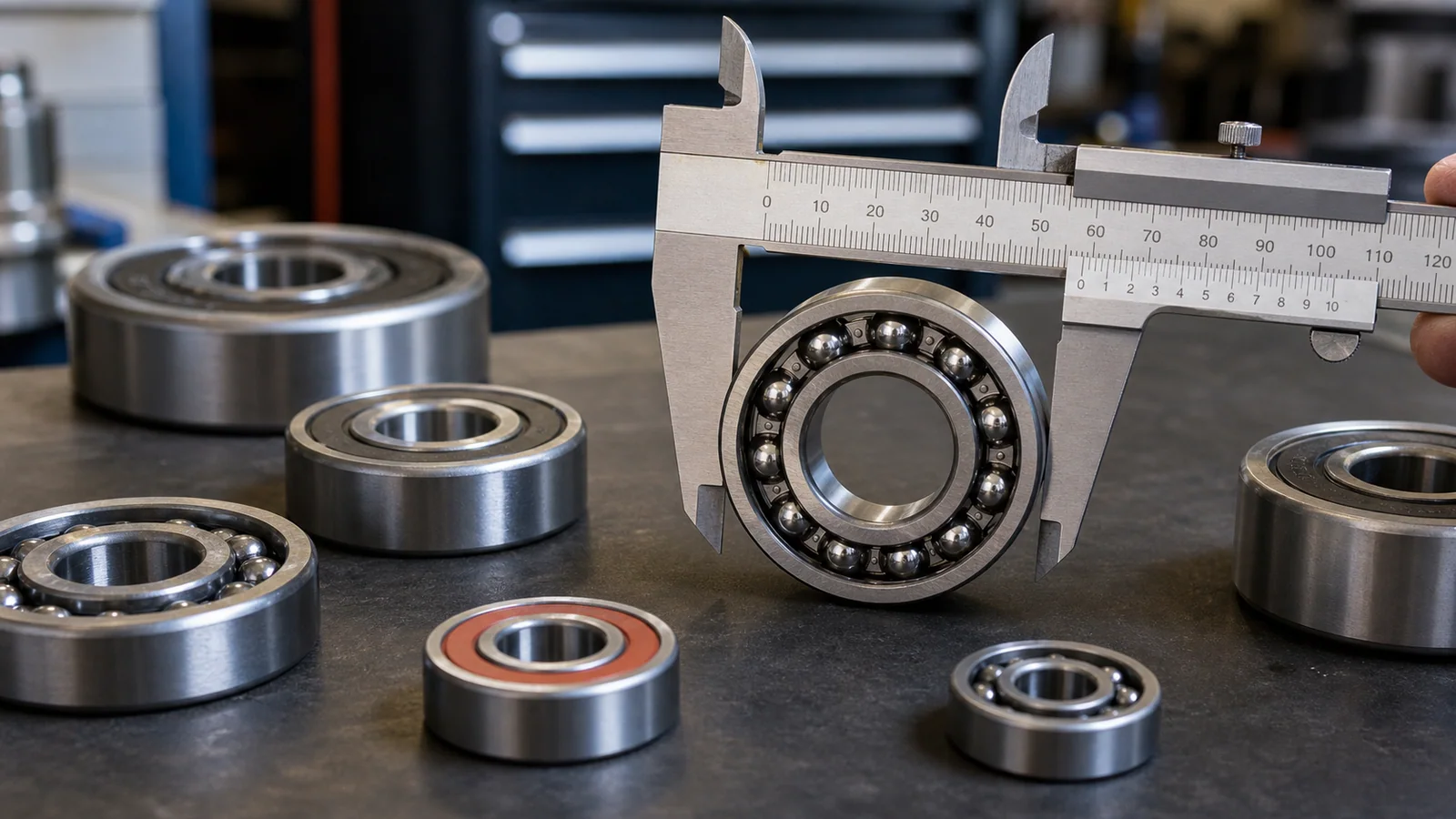
What a bearing does
A bearing sits between two moving parts - typically a shaft and a housing - and lets them rotate or slide against each other with far less friction than metal-on-metal contact. You'll find bearings inside wheels, castor wheels, and machinery, as well as in furniture parts that rotate or slide, like some drawer mechanisms and swivel fittings.
Ball bearings vs bush (sleeve) bearings
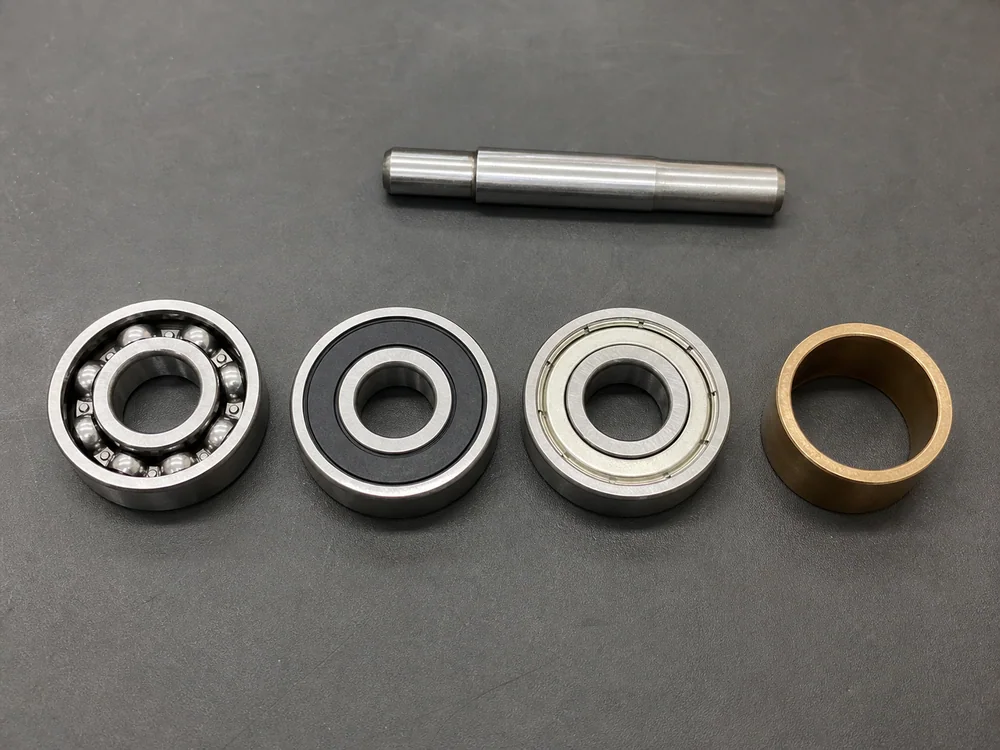
Ball bearings use rolling balls between races. Plain bush or sleeve bearings use a sliding bearing surface. The correct type depends on the original assembly and its operating requirements. Do not identify a bearing by looseness or feel alone: movement can reflect clearance, wear or damage.
For a replacement, photograph the old part and record its complete designation. If no marking remains, provide measured dimensions and the machine or wheel reference so the requirement can be checked.
Measure size and confirm the complete designation
Measure the bore, outside diameter and width in millimetres. These are commonly written as ID × OD × W. The numbers establish dimensional fit, but the full designation and application determine which bearing specification is appropriate.
Record what each measurement represents, and compare it with the assembly requirement. If the old marking is legible, preserve every letter and suffix rather than ordering by dimensions alone.
What to check before buying
- Bore, outside diameter and width: record all three in millimetres.
- Full code and manufacturer: keep every suffix, not only the basic size code.
- Seals or shields: these differ in construction and protection; they are not interchangeable labels.
- Internal clearance and accuracy: retain the specified class where relevant.
- Application: state the load, speed, temperature and environment where known.
- Lubrication: confirm whether the assembly needs oil, grease, relubrication or a supplied lubricated bearing.
Codes such as 2RS, ZZ and 2Z depend on the manufacturer's naming system. Do not assume a metal shield provides the same water exclusion as a contact seal. NSK's seal and shield comparison distinguishes their protection, torque and speed characteristics.
Dimensional fit and precision class answer different questions. An ABEC or other accuracy label does not establish load capacity, sealing or suitability for the assembly.
The easiest way to get the right one
Copy the full marking and suffixes from the old bearing, and photograph its faces. Dimensions are a useful starting point when the marking is missing, but cannot establish internal clearance, cage, lubricant or accuracy requirements. For machinery, compare the assembly's specification before accepting a substitute. NTN's bearing handbook illustrates why designation suffixes matter.
Related motion hardware
Bearings are often bought alongside other motion hardware:
- [Wheels](/categories/wheels-bearings) - for sliding gates, windows, and heavy sliding sections
- [Castor wheels](/products/castor-wheel) - swivel wheels fitted under furniture, trolleys, and racks
- [Furniture glides](/categories/wheels-bearings) - for furniture that should slide rather than roll
If a wheel or castor is wobbling, noisy, or seizing, the bearing inside it is often the actual part that needs replacing, rather than the whole wheel assembly.
Common questions
Can I use a sealed bearing where an open one was fitted before?
Not from dimensions alone. Check the complete designation, sealing arrangement, speed limits, temperature, internal clearance and lubrication system. A sealed version may change friction or prevent the assembly from receiving its intended lubricant. Confirm the proposed substitution against the equipment and bearing manufacturers’ information.
Why does my castor wheel feel rough or noisy even though the wheel itself looks fine?
A bearing is one possible cause, alongside debris, a damaged wheel, axle, alignment or fixing problems. Inspect the assembly rather than diagnosing it from noise alone. Some castors require a complete assembly replacement rather than a separate bearing.
Do I need to grease a new bearing before fitting it?
Follow the exact bearing and equipment instructions. Many sealed or shielded bearings are supplied lubricated, but the designation alone is not enough to choose a grease or relubrication method. An open bearing may operate in an oil system or need a specified grease quantity. Do not add an unspecified lubricant.
Send a clear enquiry from anywhere in Pakistan
Include the exact product or old-part reference, photographs, measurements, quantity and delivery city. You can Request Quote without visiting a shop first. Companies can use Business Supply for formal quotations and onboarding requirements. Email drawings or a parts list to adminmjtrader@gmail.com using the quotation-email action below. Confirm availability, delivery charges and timing, or your chosen collection branch, before ordering or travelling.
Technical references
NSK bearing construction guidance explains rolling-bearing features. SKF motor-bearing and sealing guidance explains application-dependent sealing. These references do not establish the specification or availability of a bearing at MJ Trader.
More Buying Guides
Bohrapir Hardware Market, Karachi: A Buyer's Checklist
A practical checklist for buying hardware in Bohrapir: what to photograph and measure, how to compare fittings, and what to confirm before travelling.
How to Measure and Order a Piano Hinge (Kabza) in Pakistan
Measure piano hinge length and width, understand gram variants, and send a clear enquiry with the correct finish, fitting details and quantity in pieces.
How to Request a Hardware Quotation in Pakistan: RFQ & BOQ Checklist
Prepare a clear hardware RFQ with the right quantities, fitting details and delivery requirements. Includes a practical checklist and sample email.
Need hardware for your project?
Browse the catalogue or message MJ Trader on WhatsApp to check current prices and availability for supply across Pakistan.Email quotations / RFQsadminmjtrader@gmail.com