 Ask to confirm
Door Hardware
Stainless Finish Door Tower Bolt
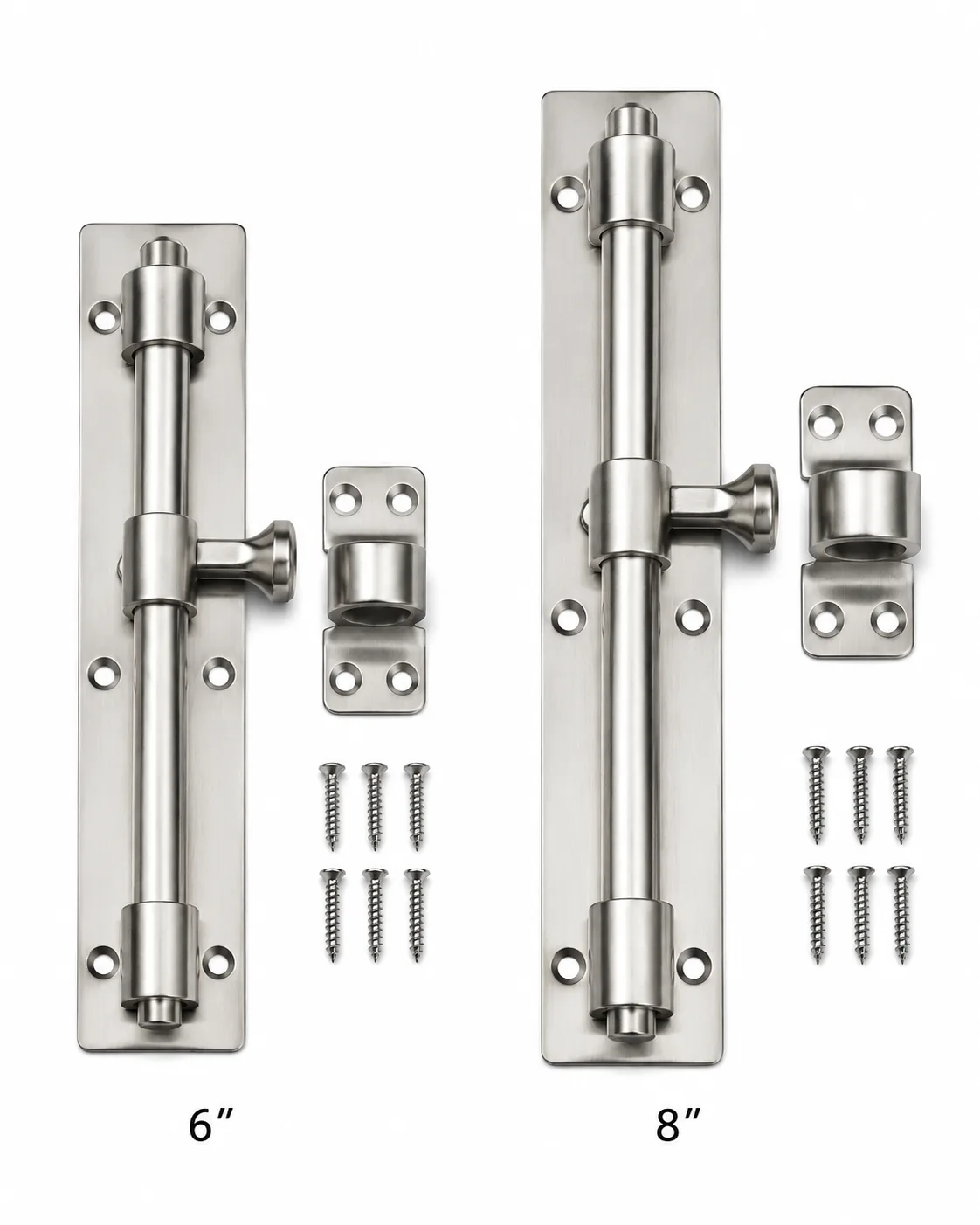
Surface-mounted door tower bolt with sliding bolt mechanism, keeper and fixing screws, available in 6 inch and 8 inch sizes.
Price on requestTower bolt, hasp and staple, and padlock - how they work together, which padlock shackle to choose, and weatherproofing tips for gates.
By MJ TraderPublished 21 July 2026Updated 3 October 2026~5 min read
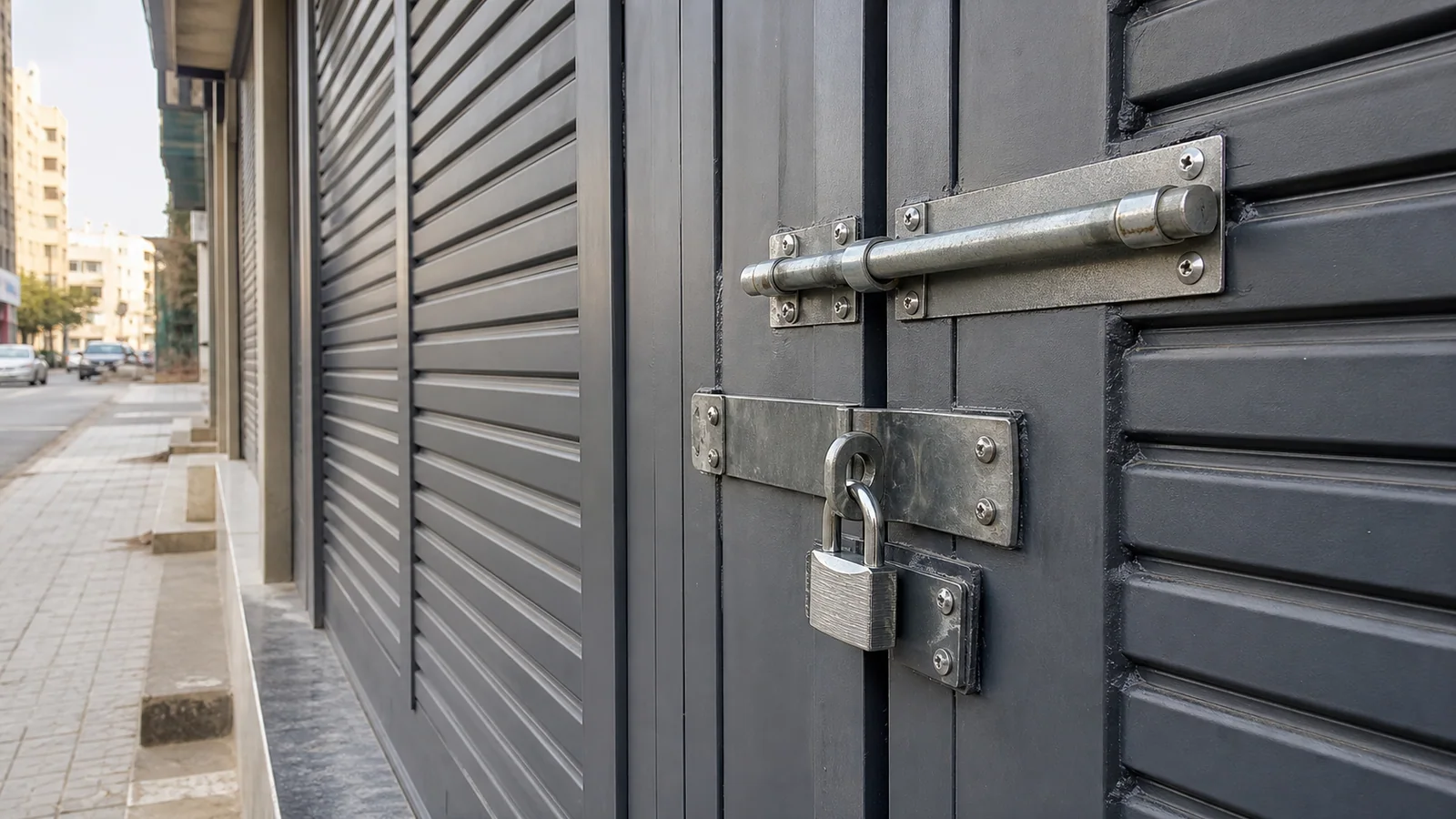
Not every door or gate needs a full lock body. For gates, shutters, and storerooms, a lot of everyday security comes down to three simple, inexpensive fittings working together: the tower bolt, the hasp and staple, and the padlock.
A tower bolt is a bolt that slides across the face of a door, gate, or window to hold it shut. It can be used on its own for basic security, or, on a model with a suitable locking loop, secured with a compatible padlock.
A hasp and staple is a hinged metal strap (the hasp) that folds down over a fixed loop (the staple) fitted to the door or frame. On its own it doesn't lock anything - its entire purpose is to give a padlock somewhere secure to pass through.
The portable half of the pairing. A padlock passes through a hasp and staple or a tower bolt's loop to actually lock the fitting shut. Padlocks vary in size, body material, and shackle type, and it's worth matching the padlock to the hasp and staple or bolt it will be used with.
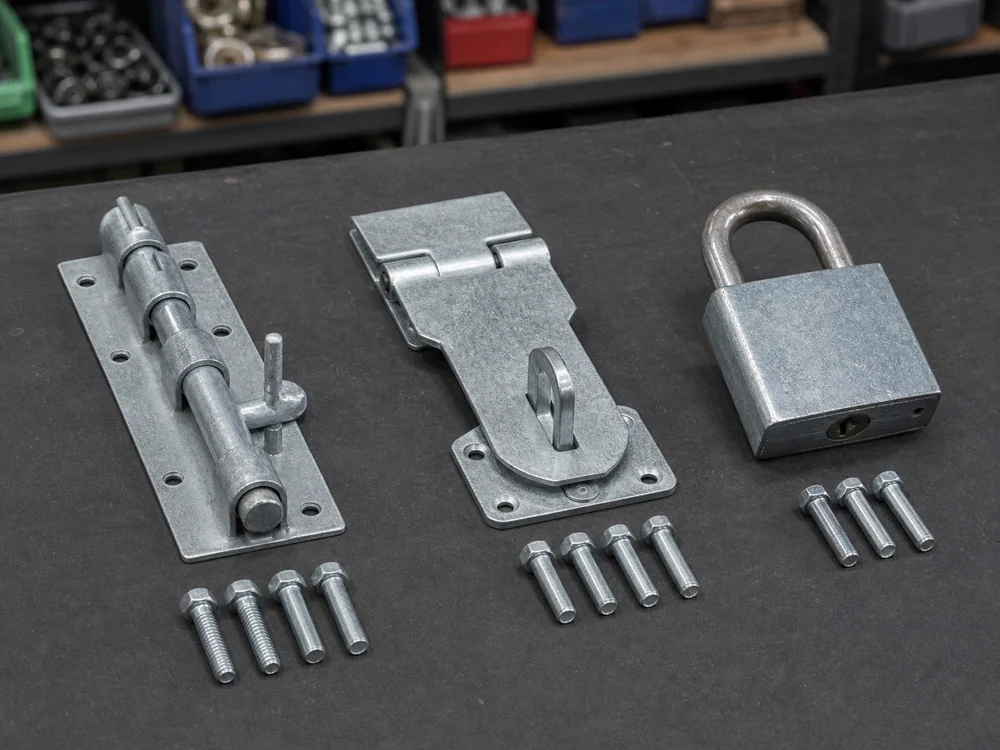
A suitable hasp and staple can work with a compatible padlock; some tower bolts also have a locking provision. You do not necessarily need all three fittings. Check the complete assembly, including the door, frame, fixing points and access to the padlock. A strong-looking fitting does not establish the security of a weak mounting surface.
Not every application needs the heaviest available hardware. A storeroom door inside a locked compound can reasonably use lighter fittings than a shutter facing a busy street. As a rough guide: the more exposed the fitting is to public access and the more valuable what's behind it, the heavier the gauge of tower bolt or hasp and staple, and the more cut-resistant the padlock shackle, it's worth choosing.
For outdoor use anywhere in Pakistan, describe exposure to rain, dust, coastal air and temperature. Confirm the exact material, finish and outdoor suitability; a silver or stainless-style appearance does not establish a material grade.
Use the lock manufacturer's specified cleaner, lubricant and maintenance interval. Do not apply generic oil, graphite or silicone advice to every lock. Master Lock's maintenance guidance, for example, excludes graphite and silicone for the locks covered by that guidance. Other models can have different instructions.
If you're setting up security on a gate or shutter for the first time, it's simplest to bring the door or gate measurements (or the door itself, if it's portable) so the hasp and staple or tower bolt can be matched to it before adding a padlock.
Compare the exact fittings, fixing method and door or frame. A tower bolt can hold a door closed from one side; a hasp and staple provides a padlock attachment. Neither label alone establishes a security rating or means that every padlock will fit.
Measure the locking opening and the thickness of the fittings. Confirm shackle diameter plus its clear inside width and height, and check body clearance and opening access. A nominal body size alone does not tell you whether the padlock will fit.
Select a lock documented for its exposure and follow that model's cleaning and lubrication instructions. Keep the keyway and moving parts free of debris as directed. Maintenance does not guarantee protection against corrosion or seizing.
For the required shackle measurements, use our padlock size and fit guide. Share a photo of the locking loop and mounting surface with your requirement.
Include the exact product or old-part reference, photographs, measurements, quantity and delivery city. You can Request Quote without visiting a shop first. Companies can use Business Supply for formal quotations and onboarding requirements. Email drawings or a parts list to adminmjtrader@gmail.com using the quotation-email action below. Confirm availability, delivery charges and timing, or your chosen collection branch, before ordering or travelling.
Ask to confirmSurface-mounted door tower bolt with sliding bolt mechanism, keeper and fixing screws, available in 6 inch and 8 inch sizes.
Price on request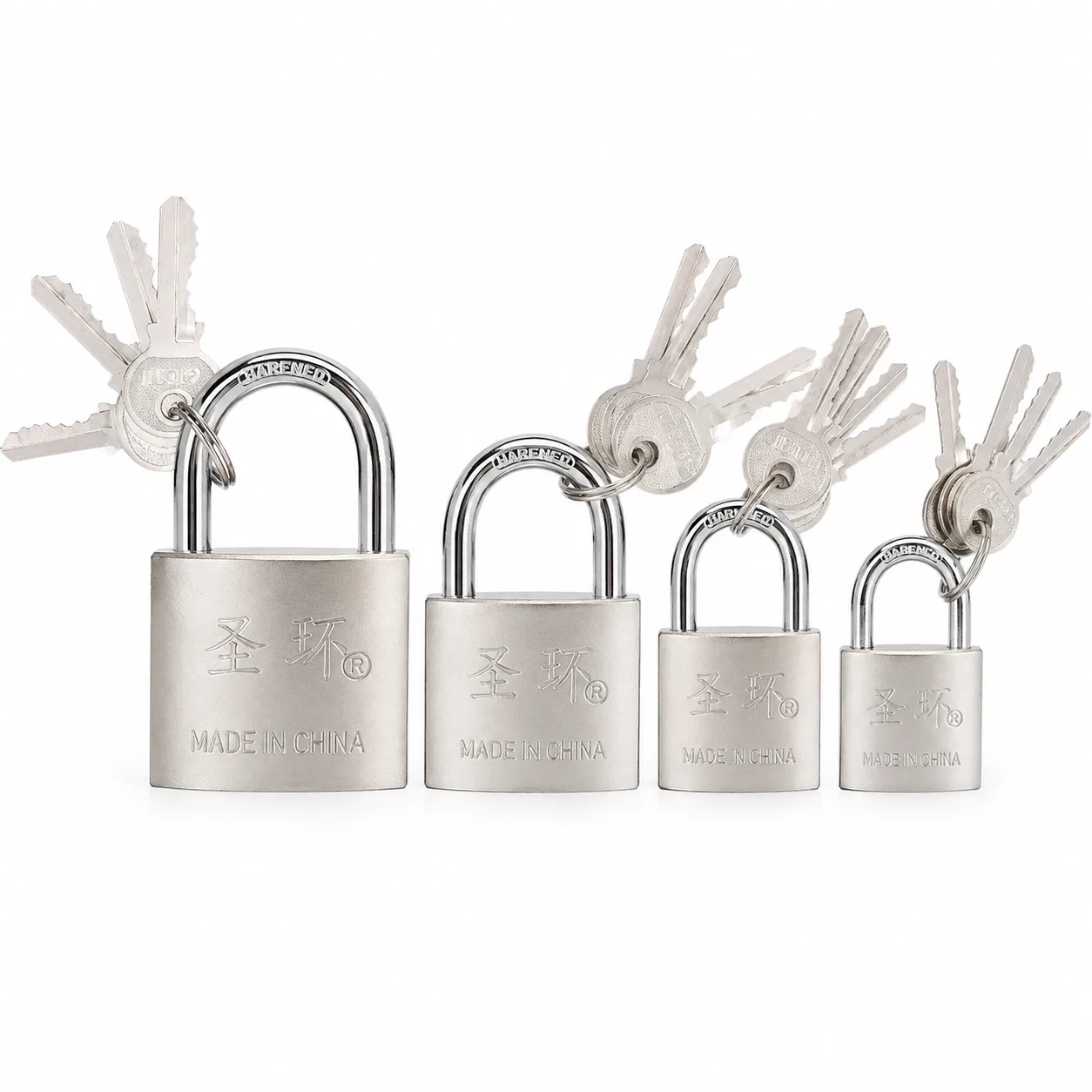 Ask to confirm
Key-operated padlock supplied with keys and available in multiple sizes.
Price on request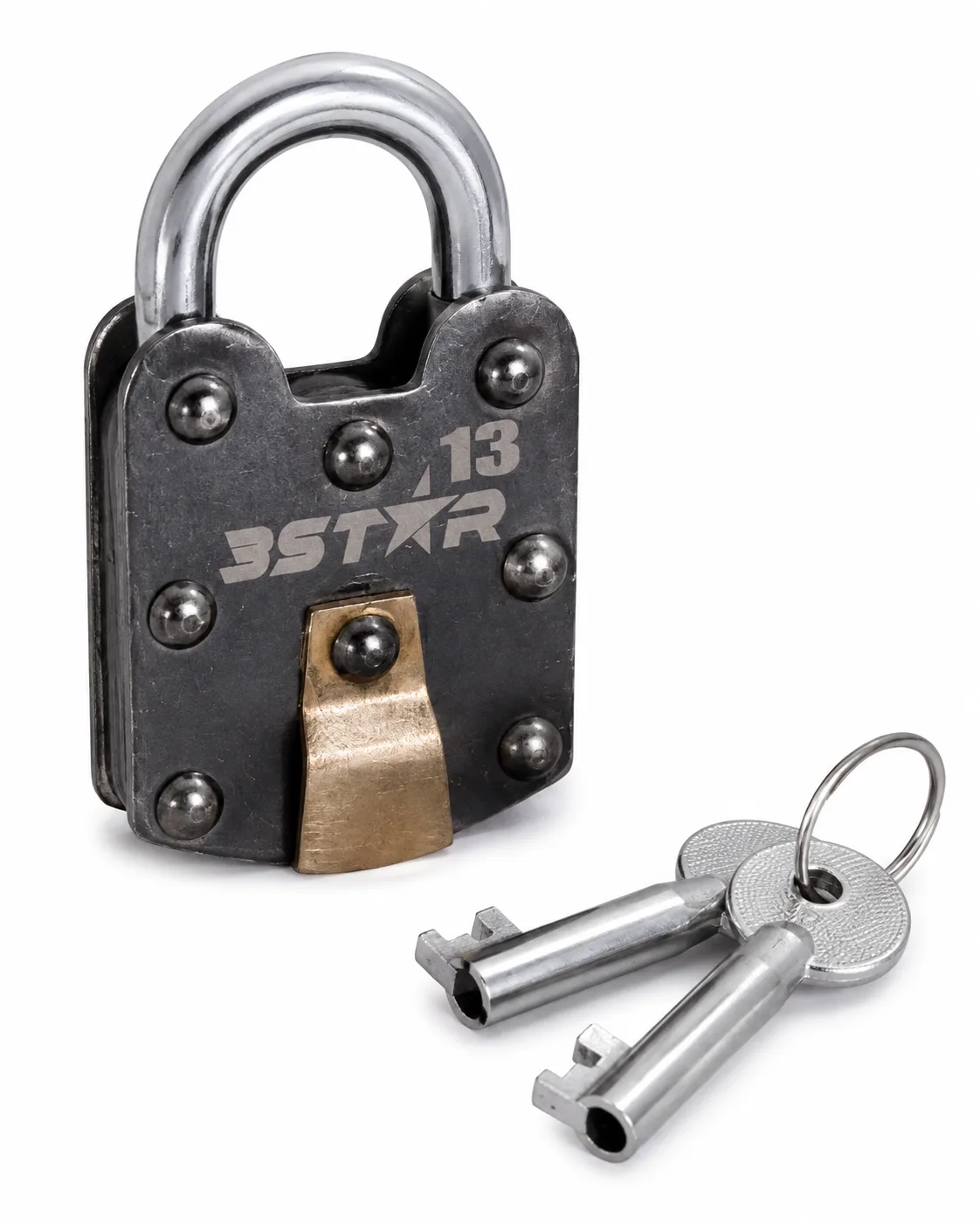 Ask to confirm
Three Star 2 inch padlock supplied with two keys for securing doors, gates, cabinets and storage areas.
Three Star · 13
Price on requestNot sure what padlock size you need? Learn how to measure shackle diameter and clearance for gates, shutters, lockers, toolboxes, and storage.
Rim lock or night latch? Compare surface-mounted, multi-bolt and electric door locks, and learn what to measure before buying.
Buying a drawer or cabinet lock? Check cylinder length, panel thickness, key quantity, cam direction, and packing before you confirm the order.
Browse the catalogue or message MJ Trader on WhatsApp to check current prices and availability for supply across Pakistan.Email quotations / RFQsadminmjtrader@gmail.com