 Ask to confirm
Door Hardware
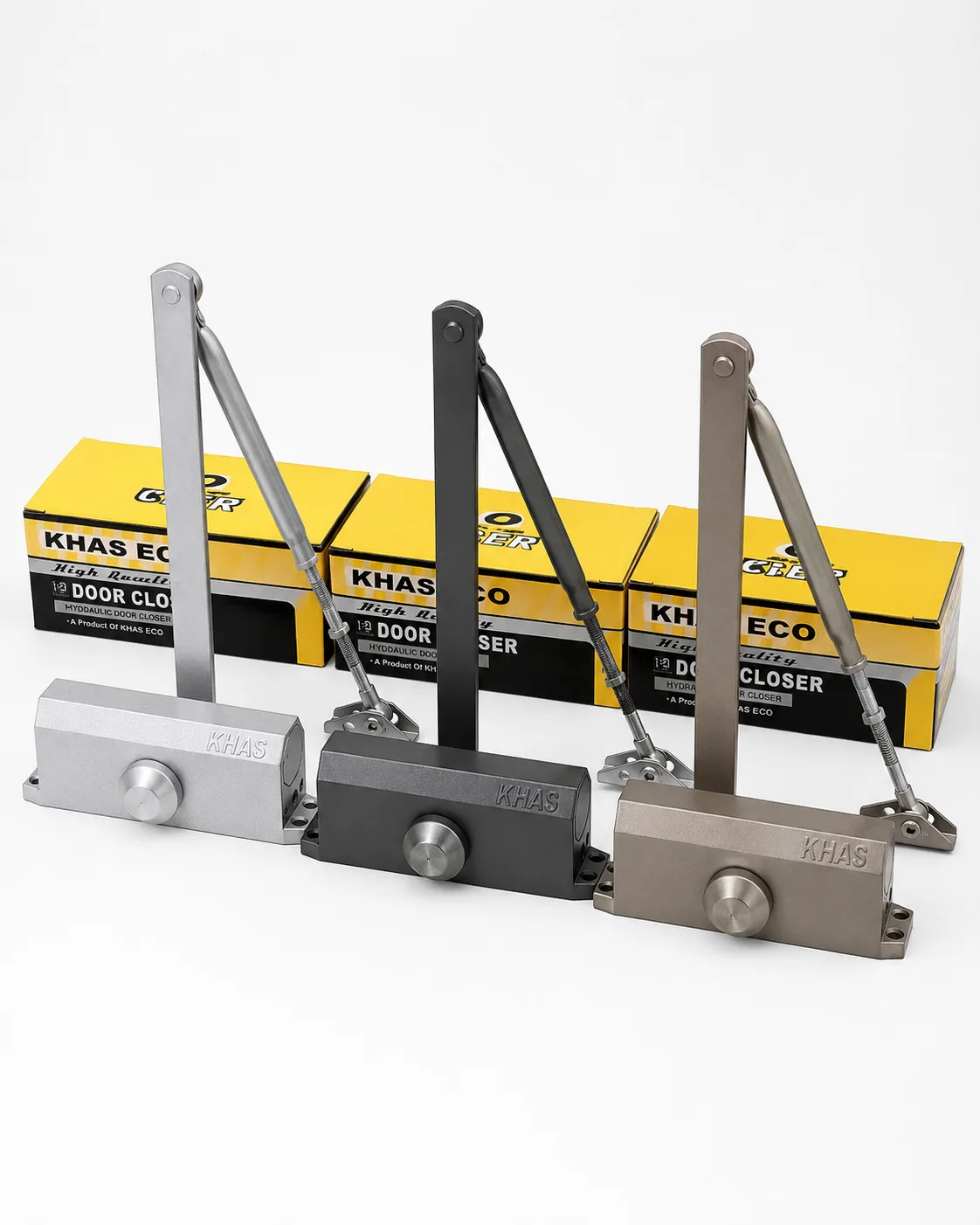
KHAS ECO Hydraulic Door Closer
KHAS ECO hydraulic door closer with articulated arm for smooth, controlled automatic door closing.
KHAS ECO
Price on requestA door that slams, sags, or leaks is telling you something. 5 signs your door closer needs attention, plus how to adjust or replace it.
By MJ TraderPublished 21 July 2026Updated 3 October 2026~5 min read
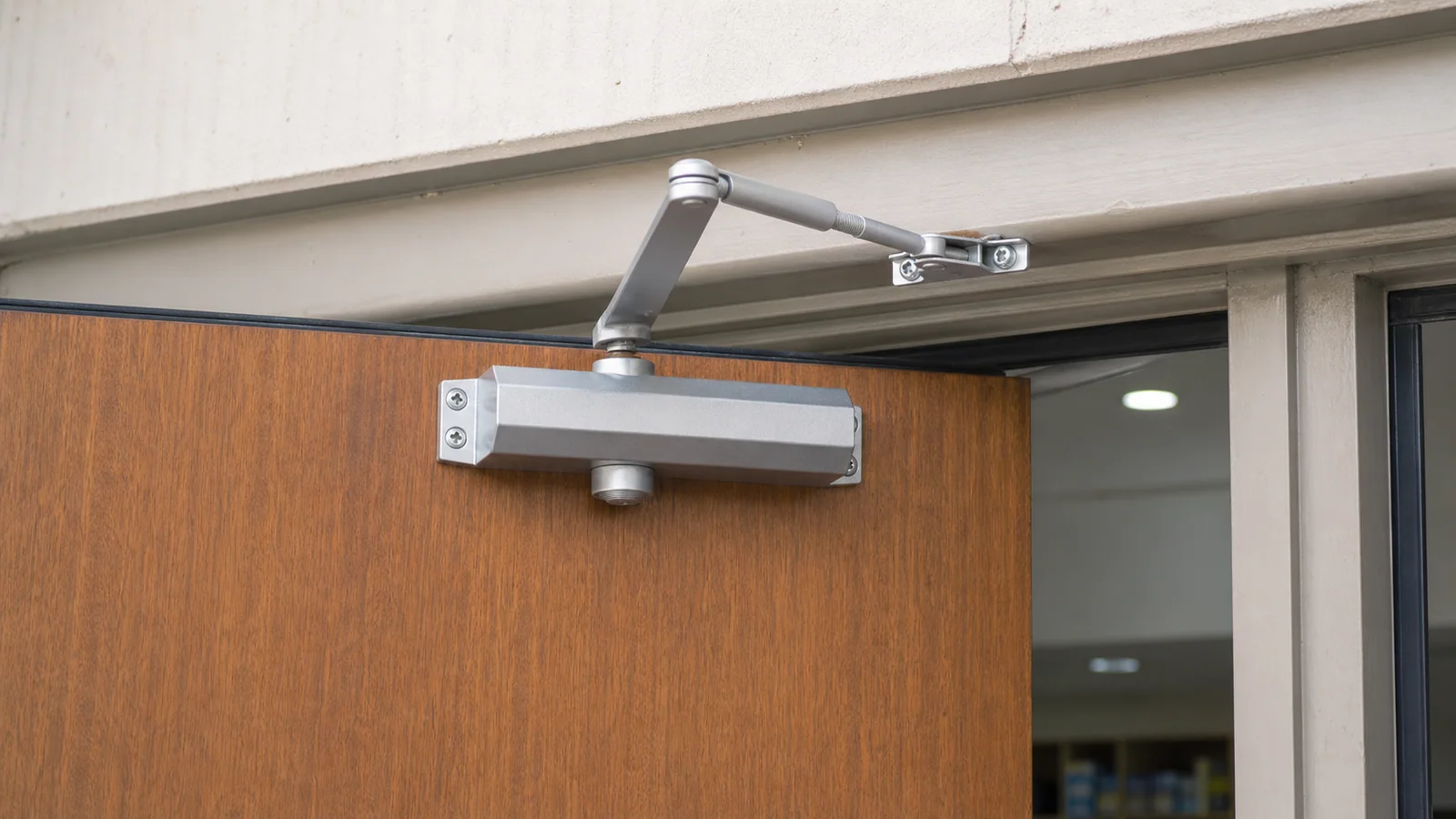
A door closer returns a door towards the closed position, while its controls regulate the movement. Surface-mounted overhead describes the mounting arrangement; hydraulic describes how movement is controlled. A closer can be both. Start by identifying the exact model, mounting and symptom before adjusting or buying a replacement.
If a door bangs shut instead of closing smoothly, the closer's internal speed control may need adjusting, or the closer itself may be reaching the end of its working life. A hydraulic door closer is specifically built to prevent this by controlling the closing speed through its final few inches of travel - persistent slamming needs inspection of the closer, arm, fixings and door movement rather than a diagnosis from the symptom alone.
A door that stops short of the frame, leaving a gap instead of latching, is a common sign of a worn or under-strength closer, especially if the door is heavier than the closer is rated for, or if the closing spring has weakened with age and use.
Oil leaking from a hydraulic closer is a fault requiring inspection. It can result from a damaged seal, valve or body; speed adjustment does not restore lost oil. Stop experimenting with the valves and ask the manufacturer or a competent fitter to confirm repair or replacement for the exact model.
The mounting arm connects the closer body to the door frame. If it's bent, loose, or the door catches on it while opening or closing, the fixing screws or the arm itself may need tightening or replacing - check this before assuming the whole closer has failed, since a loose arm is a cheap and easy fix compared to a new unit.
If there's no resistance or automatic closing action left at all, the closer has likely failed internally (a broken spring or a fully worn seal) and needs replacing rather than adjusting.
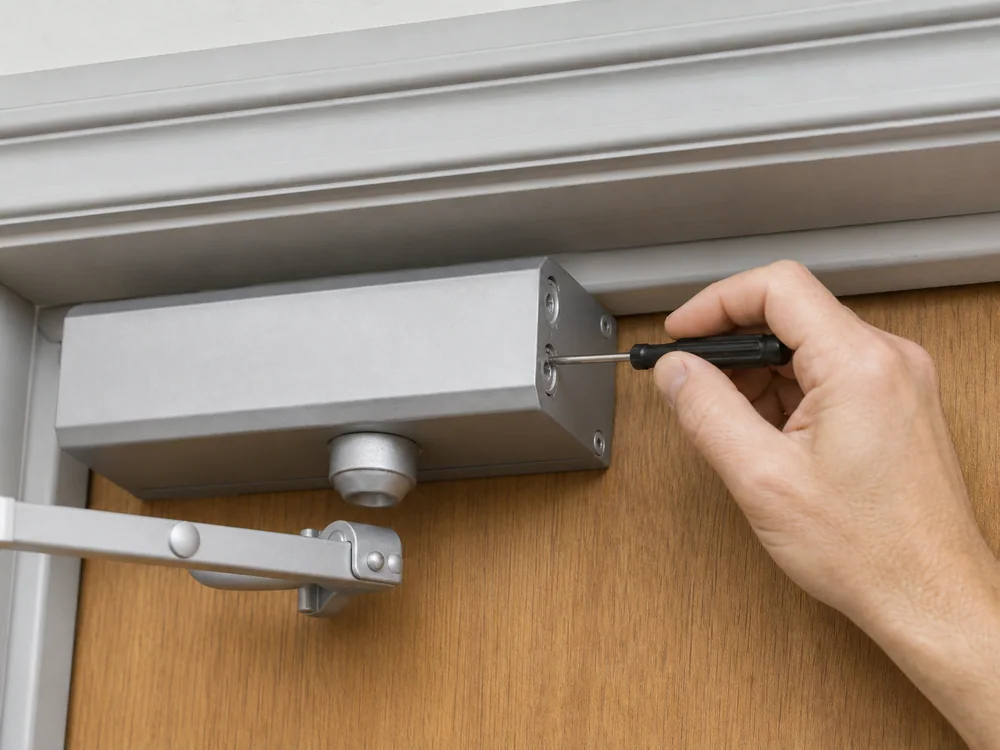
Find the exact closer's instructions first. Valve positions, labels, directions and permitted adjustment limits vary. Support safe door movement and check hinges, latch alignment, seals and arm fixings before treating every symptom as a speed-setting problem.
Make only small changes within the model's permitted range, testing after each change. Do not remove or back out a valve, force it against its stop, or use a generic number of turns for every closer. If the door still slams or fails to latch, obtain an inspection rather than turning the controls fully.
Allegion's backcheck guidance distinguishes cushioning from a stop. Its LCN valve-limit guidance is model-specific; its turn limit does not apply to every closer.
Door closers are sized to the width and weight of the door they're fitted to, and closers are generally sold in a range of size numbers, from light-duty for narrow interior doors up to heavy-duty for wide, heavy exterior doors. A closer that's undersized for a heavy entrance door will wear out faster, may not close the door reliably, and can even fail to latch properly in windy weather. When replacing a closer, it's worth confirming the door's approximate width and weight - or simply bringing the model number of the failed closer - so the shop can match a suitable replacement rather than guessing.
Temperature and exposure can affect closer behaviour across Pakistan. Check the exact model's operating conditions if seasonal changes appear. A temperature explanation does not rule out a fault: persistent slamming, leakage or failure to latch still needs inspection.
Repairability depends on the model and fault. Ask about approved replacement arms or parts, warranty handling and whether the manufacturer permits service. Do not dismantle a spring-loaded closer or assume every internal fault is serviceable.
Temperature can affect hydraulic behaviour, but a speed change can have other causes. Compare operation with the model's instructions and have persistent slamming, failure to latch or leaks checked.
The need depends on the door's purpose and approved specification. Fire, escape-route or other specified doors require compatible hardware and competent installation; a general guide cannot establish the required doorset performance.
Send the model marking, photos of the body and arm, door width and approximate weight, material, opening direction and existing mounting-hole positions. State the symptom and any required doorset documentation. The current KHAS ECO hydraulic closer and MAXELL closer listings are starting points for enquiries; confirm the exact capacity and mounting requirements before choosing.
Include the exact product or old-part reference, photographs, measurements, quantity and delivery city. You can Request Quote without visiting a shop first. Companies can use Business Supply for formal quotations and onboarding requirements. Email drawings or a parts list to adminmjtrader@gmail.com using the quotation-email action below. Confirm availability, delivery charges and timing, or your chosen collection branch, before ordering or travelling.
Ask to confirmKHAS ECO hydraulic door closer with articulated arm for smooth, controlled automatic door closing.
KHAS ECO
Price on request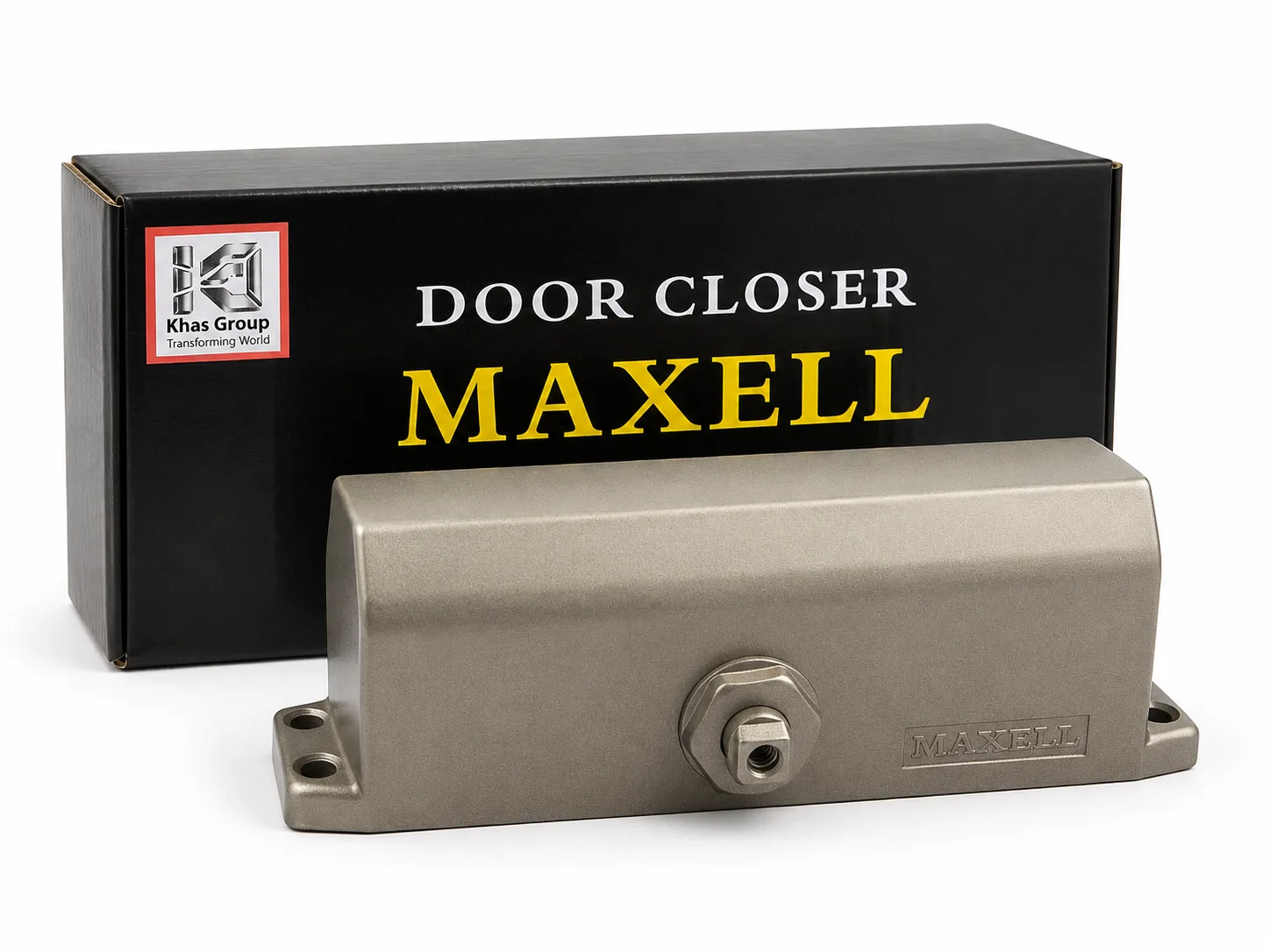 Ask to confirm
MAXELL door closer by Khas Group for controlled automatic closing of doors.
MAXELL
Price on requestMeasure piano hinge length and width, understand gram variants, and send a clear enquiry with the correct finish, fitting details and quantity in pieces.
Compare lever, pull, grab and recessed-style handles, then learn which dimensions and fitting details to check before buying a replacement.
A practical checklist for buying hardware in Bohrapir: what to photograph and measure, how to compare fittings, and what to confirm before travelling.
Browse the catalogue or message MJ Trader on WhatsApp to check current prices and availability for supply across Pakistan.Email quotations / RFQsadminmjtrader@gmail.com