 In stock
Furniture Hardware
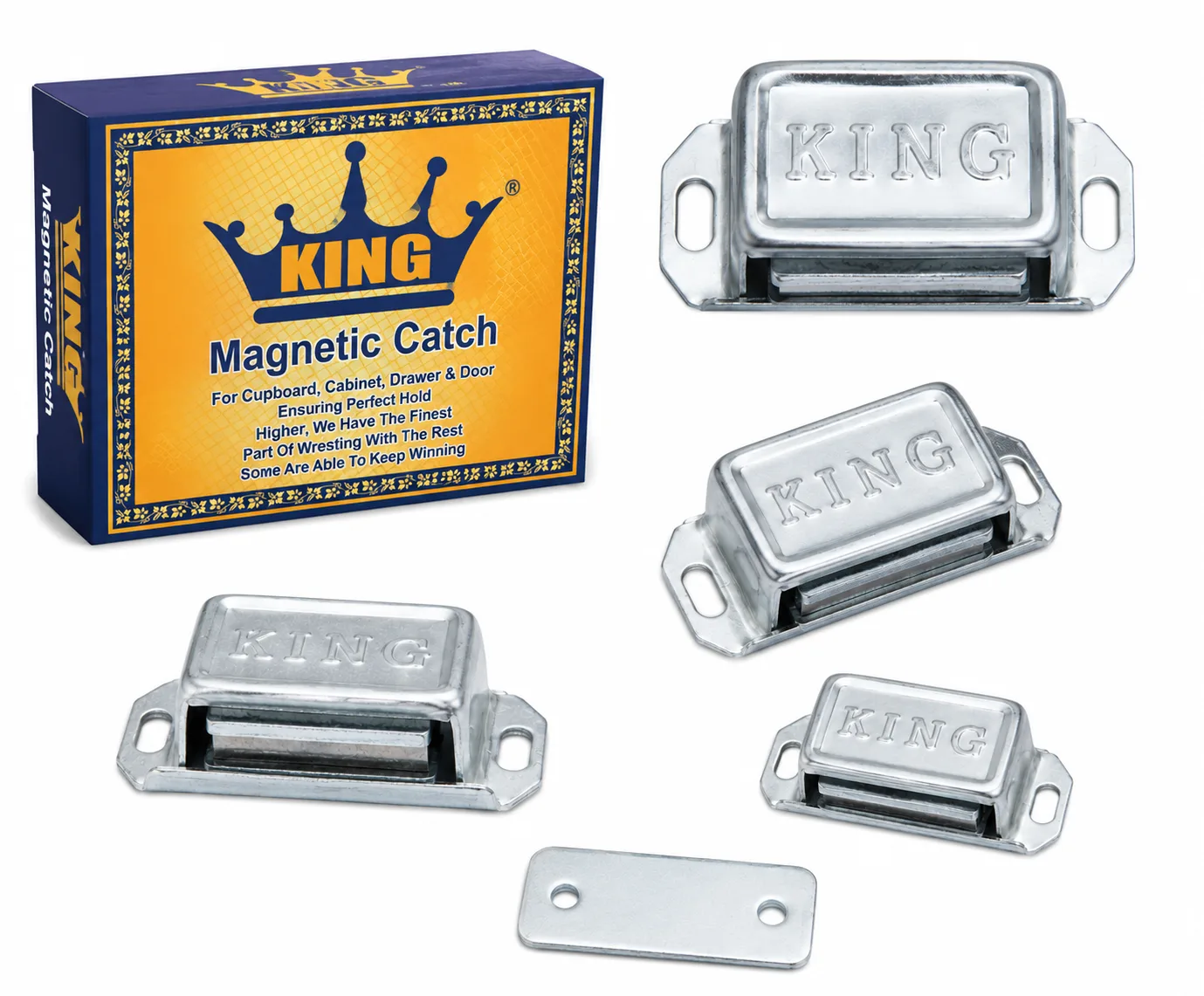
KING 2 Inch Magnetic Cabinet Catch
KING magnetic catch for cupboard, cabinet, drawer, and light door applications.
Price on requestMagnetic catch or roller catch? A practical guide for cabinet, cupboard, wardrobe, and light door closing hardware.
By MJ TraderPublished 26 July 2026~3 min read
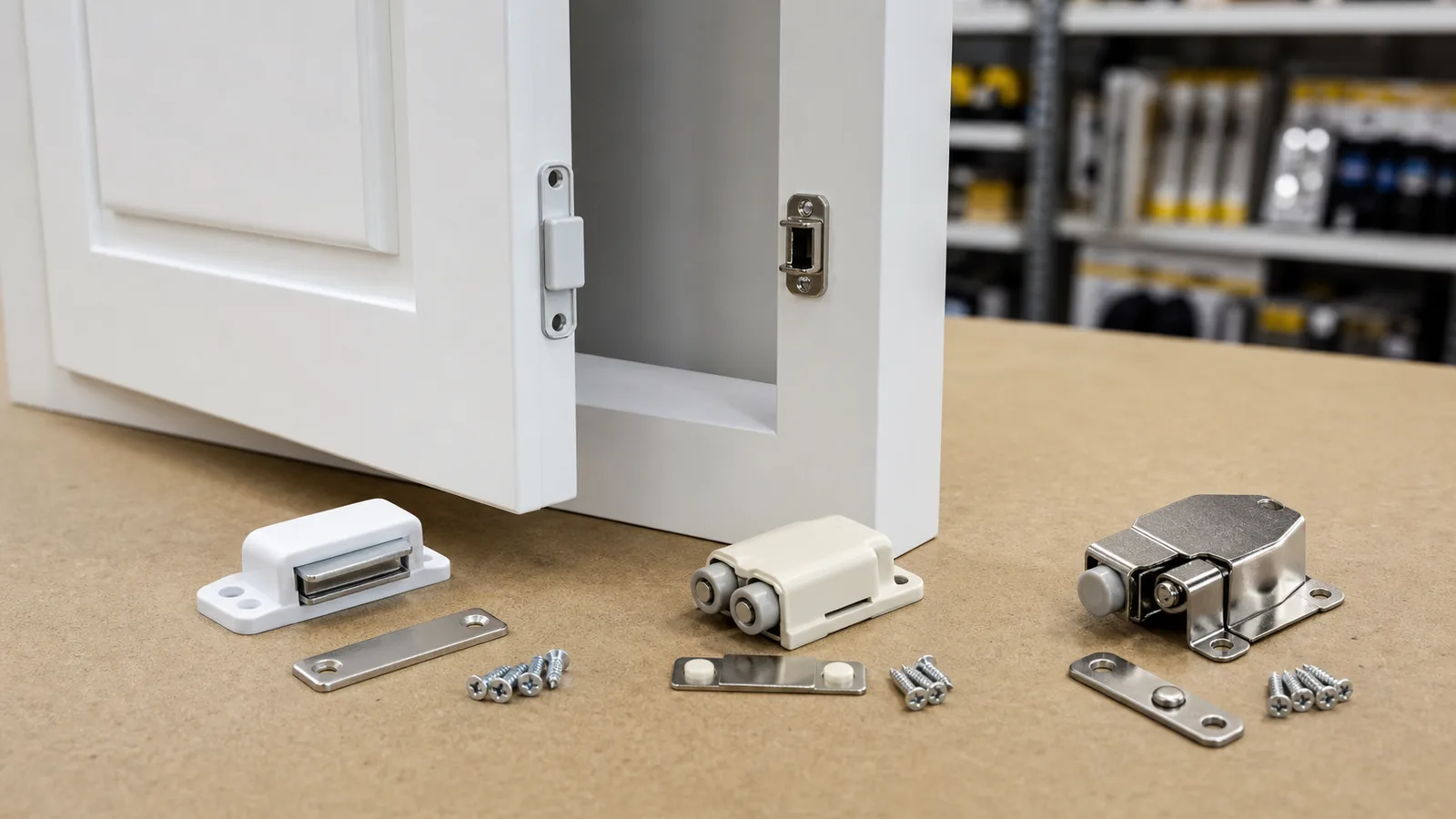
A cabinet catch is not a security lock. Its job is to keep a cabinet, cupboard, wardrobe, or light door closed during normal use. If the door needs key security, use a lock. If it only needs to stay shut neatly, a catch is usually enough.
Two common choices are magnetic catches and roller catches. Both can work well, but they feel different in use and suit different doors.
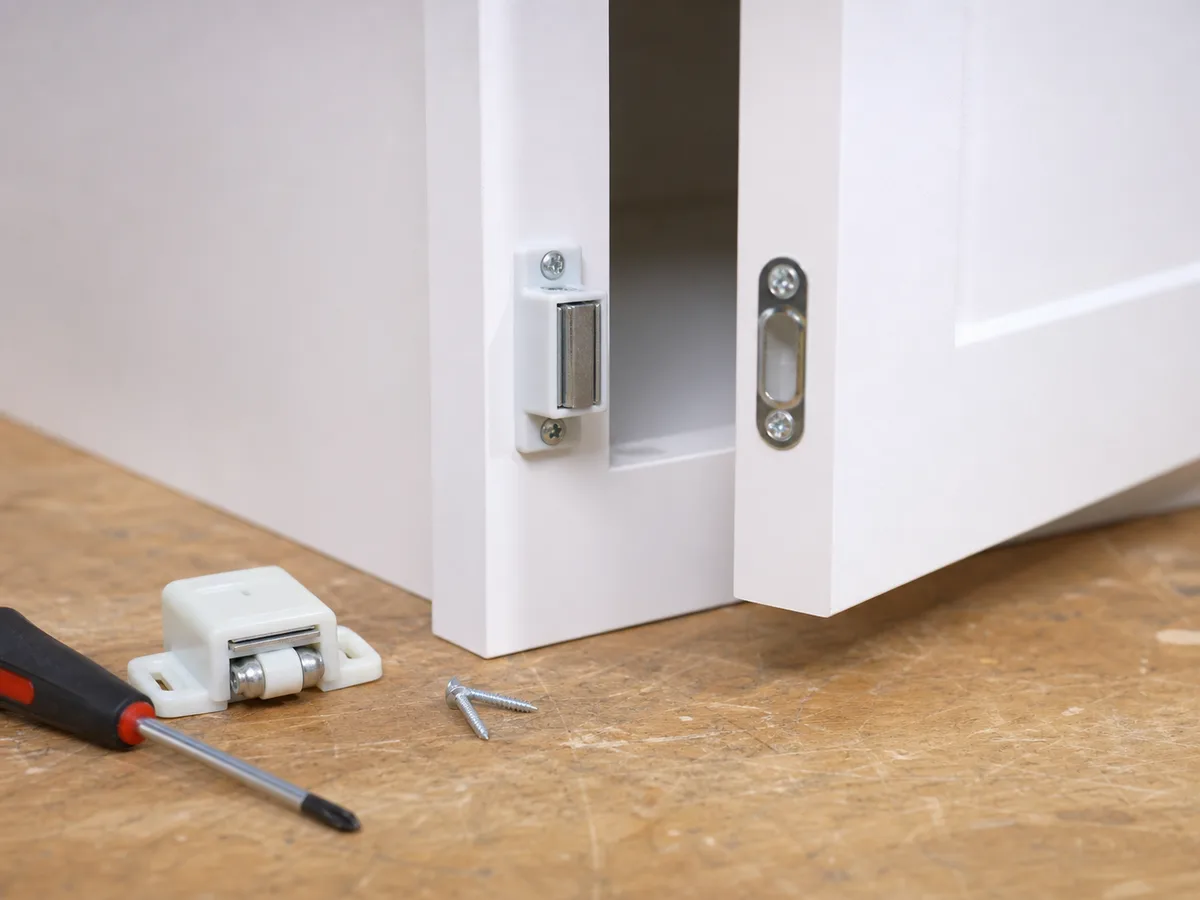
A magnetic catch uses a magnet on the cabinet frame and a metal strike plate on the door. When the door closes, the plate meets the magnet and holds the door shut. Magnetic catches are simple, quiet, and easy to understand, which is why they are common on cupboards, wardrobes, light cabinet doors, and furniture doors.
Magnetic catches are a good choice when you want a clean close without a mechanical click. They are especially useful where the door is already well aligned and only needs a light holding force.
A roller catch uses one or two spring-loaded rollers that grip a strike plate or tongue when the door closes. It usually gives a more mechanical snap than a magnetic catch. This can feel firmer, but it also needs cleaner alignment between the catch and strike plate.
Roller catches are useful when you want a more positive closing feel on a light cabinet or cupboard door, especially where a plain magnet feels too soft.
A catch can only work properly if the door reaches it cleanly. Before replacing the catch, check whether the door is sagging, the hinges are loose, or the strike plate is sitting too far from the catch. A weak hold is often caused by poor alignment rather than a faulty catch.
For a reliable quote, share a photo of the inside of the cabinet with the door partly open. MJ Trader can then suggest whether products such as KING Magnetic Catch, K.SON Magnetic Door Holder, or another cabinet catcher style is closer to what you need.
Often yes on light furniture doors, but the screw holes and strike position may not match. Check the fitting space before assuming it is a direct swap.
No. It holds a door closed during normal use, but it is not a lock. For security, use a drawer lock, cabinet lock, padlock, or door lock depending on the application.
Most problems come from door alignment, loose hinges, a strike plate that is too far away, or a catch that is too light for the door. Check those points before ordering a replacement in bulk.
In stockKING magnetic catch for cupboard, cabinet, drawer, and light door applications.
Price on request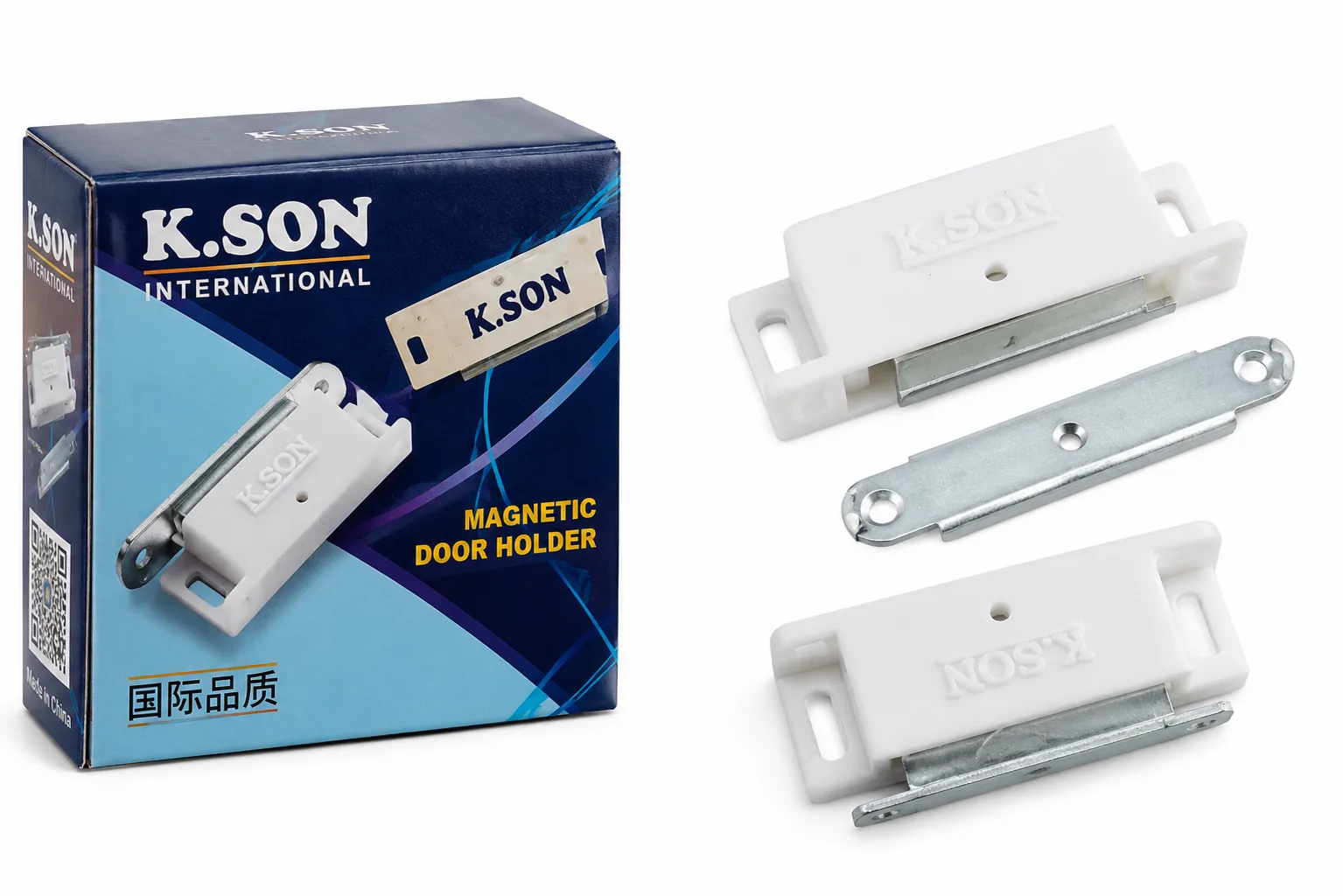 In stock
K.SON 2-inch magnetic catch with a plastic housing and metal strike plate for cabinets and cupboards.
Price on requestCabinet door gaps uneven or soft-close not sitting right? Learn the safe checks for side, height, and depth adjustment on 3D concealed hinges.
Concealed, standard, or piano hinge - plus overlay types and whether soft-close is worth it. A complete cabinet hinge buying guide.
Compare lever, pull, grab and recessed-style handles, then learn which dimensions and fitting details to check before buying a replacement.
Browse the catalogue or message MJ Trader on WhatsApp to check current prices and availability at the Bohra Pir or Saddar shops.